Is this medical advice?
No. It is a self-help guide to sleep habits, the bedroom, and how to handle night wakings, plus a plain-English overview of supplements and medical options you can discuss with your doctor. It is not intended to diagnose, treat, cure, or prevent any disease. It tells you clearly when to see one and gives you the questions to take with you.
What exactly do I get?
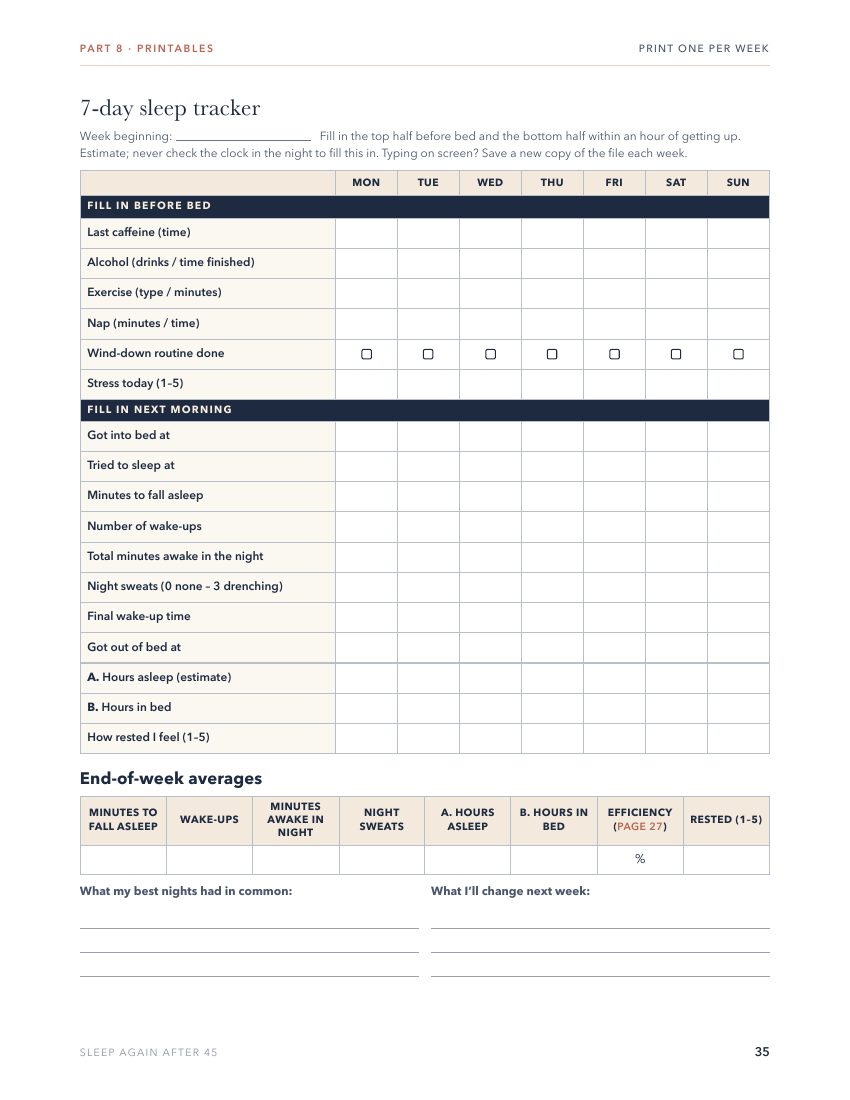
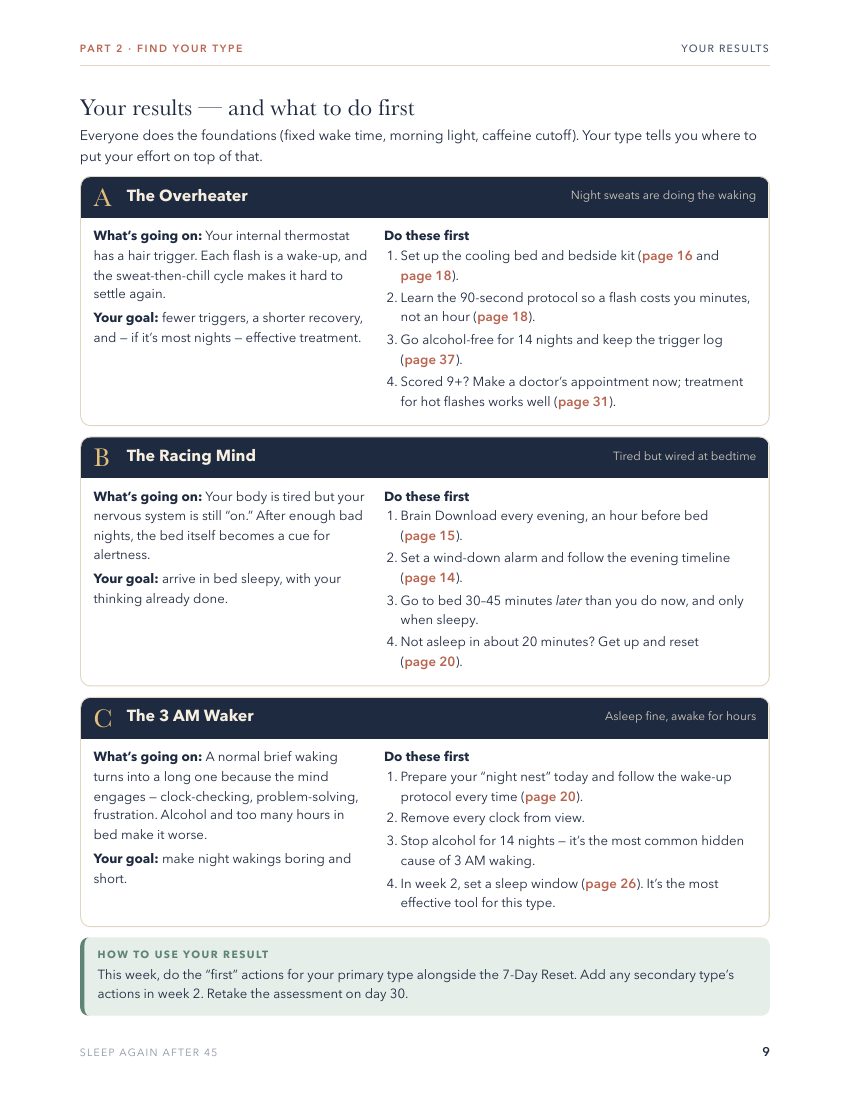
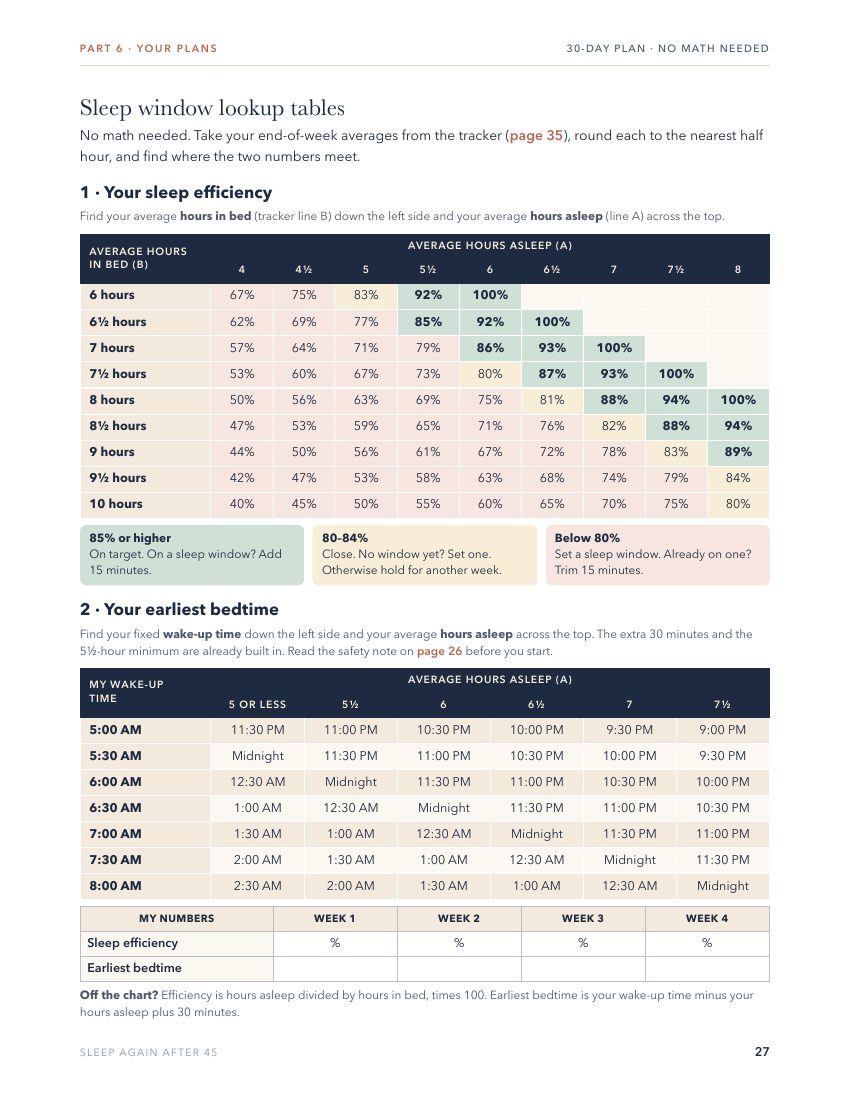
One 40-page PDF, delivered by email as soon as you check out. It includes the self-assessment, the 7-Day Reset, the 30-Day Plan, and six trackers and worksheets.
Do I need a printer?
No. Every blank line, checkbox, and tracker can be filled in on a computer or tablet. To keep what you type, open the file in Adobe Acrobat Reader (free) or Apple Preview and save it. If you prefer paper, the worksheets print on US Letter.
How soon will I notice a difference?
Some steps help the first night: a cooler bed and a plan for 3 AM make wakings less miserable right away. Deeper change usually takes two to four weeks of repetition, which is why the plan runs for 30 days.
Do I have to buy supplements or gadgets?
No. The system is built on habits, timing, and your bedroom setup. One chapter reviews common sleep aids and supplements honestly, including the ones not worth your money.
What if night sweats are my main problem?
That is one of the five sleep types the guide covers. You get a cooling setup, a 90-second protocol for when one wakes you, a 14-night trigger log, and guidance on when it is worth talking to your doctor.
Will habits be enough for me?
Not always, and the guide says so. If you wake up drenched most nights, or you snore and wake exhausted, that is worth a conversation with your doctor. The guide helps you spot that early instead of working harder on habits alone.